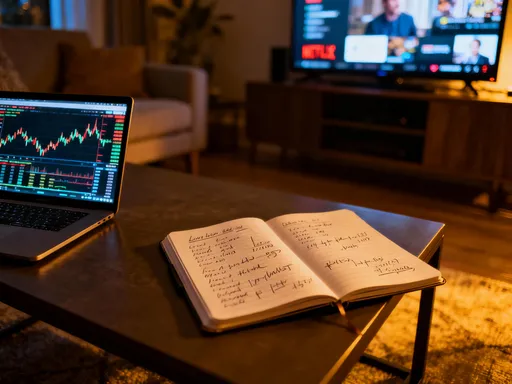
How I Turned My Netflix Binge Into a Smarter Investment Habit
What if your weekend movie marathon wasn’t just fun—but also a clue to smarter investing? I used to see entertainment spending as pure loss. Then I realized: how I choose shows, where I stream, even my subscription habits revealed patterns I could profit from. This isn’t about cutting costs—it’s about upgrading how you think. Let me walk you through the unexpected link between entertainment spending and real financial gains. At first glance, streaming services seem harmless—affordable, convenient, and endlessly entertaining. But beneath the surface, these small, recurring expenses form habits that shape not just how we spend time, but how we manage money. The shift from passive viewer to mindful investor starts with noticing what we consume, why we consume it, and how those choices reflect deeper financial behaviors. This journey isn’t about guilt or deprivation. It’s about awareness, intention, and turning everyday decisions into stepping stones for long-term wealth.
The Hidden Cost of "Just One More Episode"
Streaming has become a cornerstone of modern relaxation. For many, logging into a favorite platform after a long day feels as natural as making a cup of tea. The ease of access, vast libraries, and low monthly fees make digital entertainment appear financially harmless. But when examined closely, the cumulative effect of these small expenses reveals a different story. The real cost of "just one more episode" isn’t measured in screen time—it’s reflected in missed opportunities to grow wealth. Consider the average household subscribing to three streaming platforms at $15 each. That’s $45 per month, or $540 annually. While that may not seem excessive, it’s equivalent to investing in a low-cost index fund that could grow to over $7,000 in ten years with a modest 7% annual return. The issue isn’t the entertainment itself, but the lack of intention behind the spending.
Many consumers fall into the trap of auto-renewing subscriptions they rarely use. A platform tried for a single series, forgotten after a month, continues to charge indefinitely. These idle subscriptions create a quiet but steady drain on disposable income. Behavioral economists refer to this as "payment decoupling"—the psychological separation between spending and the act of paying. Because charges are automatic and relatively small, they escape scrutiny. Yet, over time, these overlooked fees accumulate, diverting funds that could otherwise support emergency savings, retirement accounts, or debt reduction. The danger lies not in the individual transaction, but in the pattern of unconscious consumption.
Recognizing this behavior is the first step toward financial clarity. Tracking monthly entertainment expenses—down to every free trial turned paid plan—reveals how much is truly being spent on digital leisure. More importantly, it exposes gaps between value received and money paid. Some platforms deliver consistent enjoyment; others linger in the background, unused but still billed. By auditing usage, households can identify redundancies, cancel underutilized services, and redirect those funds toward higher-impact financial goals. This isn’t about eliminating enjoyment—it’s about ensuring every dollar spent aligns with personal priorities. When spending becomes deliberate, it transforms from passive consumption into a tool for financial empowerment.
From Passive Viewing to Active Investing Mindset
Entertainment doesn’t have to be financially neutral—or negative. When approached with awareness, it can serve as a bridge to greater financial literacy. The shift begins with changing how we engage with content. Instead of mindlessly scrolling through recommendations, consider watching with purpose. Documentaries on innovation, biopics of entrepreneurs, or series exploring global markets offer more than storytelling—they provide real-world insights into economic trends, business strategies, and consumer behavior. The knowledge gained isn’t academic; it’s practical, and it can shape how we view investment opportunities.
I began to notice a pattern in my own viewing: I was drawn to stories about technology startups, sustainable energy, and financial resilience. These weren’t just entertaining—they sparked curiosity. I started researching the companies featured, exploring the industries discussed, and comparing them to my own portfolio. What began as casual interest evolved into informed consideration. For example, after watching a documentary on renewable energy, I looked into clean-tech ETFs and found several with strong long-term performance. This wasn’t a reckless bet; it was a decision grounded in observation and research. The content didn’t tell me what to buy, but it gave me a starting point for deeper inquiry.
This mindset shift—from passive viewer to active learner—mirrors the transition from emotional to strategic investing. When we consume media critically, we develop the habit of questioning, analyzing, and connecting ideas. These are the same skills needed to evaluate stocks, assess market trends, and avoid impulsive decisions. Moreover, listening to financial podcasts or business-focused programs during commutes or chores turns idle time into learning time. Over months, this consistent exposure builds financial confidence. You begin to recognize terms like "diversification," "market correction," and "compound growth" not as abstract concepts, but as real forces shaping your choices. The screen becomes not just a source of entertainment, but a classroom for wealth-building.
The Upgrade Path: How Spending Shapes Investment Clarity
Consumption upgrade is not about spending more—it’s about spending smarter. In the world of streaming, this means choosing quality over quantity. Instead of subscribing to every new platform, selective viewers opt for services that consistently deliver value. They may pay a premium for ad-free experiences, higher resolution, or exclusive content, but they do so with intention. This principle of value-based spending directly translates to investing. Just as you wouldn’t pay for a streaming service that offers little enjoyment, you shouldn’t invest in assets without clear potential.
Disciplined investors focus on high-conviction opportunities rather than chasing every market trend. They conduct research, assess risk, and wait for the right entry point. Similarly, mindful consumers evaluate whether a new subscription truly enhances their experience before committing. This alignment between consumption and investment behavior fosters financial discipline. When you apply the same scrutiny to both entertainment and portfolio decisions, you develop a sharper sense of value. You learn to distinguish between hype and substance, between short-term novelty and long-term benefit.
Consider the investor who avoids speculative stocks promoted on social media, just as they avoid signing up for a short-lived platform promising exclusive content. Both require patience and critical thinking. By treating your entertainment budget as a decision-making laboratory, you refine your ability to resist impulse and focus on sustainability. Over time, this habit strengthens your investment judgment. You become less reactive to market swings and more committed to a long-term strategy. The upgrade path, therefore, is not defined by how much you spend, but by the intentionality behind each choice. When spending becomes strategic, it lays the foundation for lasting financial clarity.
Spotting Trends Before They Go Mainstream
Cultural shifts often appear in entertainment long before they dominate financial headlines. The rise of streaming, for instance, was foreshadowed by changing viewer habits—shorter attention spans, demand for on-demand content, and the decline of scheduled programming. Those who paid attention could see the broader implications for technology, advertising, and media ownership. Similarly, the surge in fitness content preceded the growth of wearable tech companies. Observant consumers who noticed this trend early had a head start in understanding market movements.
Today, patterns in digital consumption continue to signal economic shifts. The growing popularity of international films and non-English series reflects increasing global connectivity and cross-border demand. This trend aligns with the expansion of multinational companies and the importance of diversifying investments across regions. Likewise, the rise of AI-generated content and virtual influencers hints at advancements in artificial intelligence and digital labor—sectors already attracting significant investment. By observing what captures audience interest, individuals can anticipate where capital might flow next.
This isn’t about predicting the future with certainty, but about cultivating awareness. You don’t need insider information to recognize a trend. You only need to pay attention to what people are watching, sharing, and discussing. Are documentaries on space exploration gaining traction? That could signal interest in aerospace innovation. Is there a surge in content about sustainable living? That may reflect growing consumer demand for eco-friendly products and services. These insights, when combined with financial research, can inform smarter investment choices. Trend spotting isn’t speculative—it’s observational. And when grounded in real behavior, it becomes a powerful tool for strategic planning.
Building a Diversified Portfolio Inspired by Viewing Habits
Diversification is a cornerstone of sound investing, and it has a surprising parallel in entertainment consumption. Just as a well-rounded viewing diet includes documentaries, dramas, comedies, and international content, a resilient portfolio spreads risk across asset classes, sectors, and geographies. Relying solely on one genre limits your perspective; depending on a single stock or sector exposes you to disproportionate risk. The principle is the same: variety provides balance and reduces vulnerability to sudden changes.
Consider the viewer who watches only one type of show—say, true crime. While enjoyable, this narrow focus means missing out on insights from other genres. Similarly, an investor who puts all their money into tech stocks may benefit during a bull run, but suffers significantly when the sector corrects. Diversification mitigates this risk by ensuring that gains in one area can offset losses in another. By mapping viewing diversity to investment strategy, individuals can identify imbalances in their portfolios. If your entertainment choices are global, why shouldn’t your investments be?
Moreover, exposure to different cultures and ideas through international content fosters a broader worldview—one that supports global investing. Emerging markets, often overlooked by conservative investors, can offer strong growth potential. Just as foreign films introduce new narratives, emerging-market ETFs introduce new opportunities. The key is not to chase novelty, but to build a portfolio that reflects a wide range of possibilities. Like a curated watchlist, a diversified portfolio is designed for both enjoyment and endurance. It withstands shifts in taste and market conditions because it isn’t dependent on a single source of value.
Risk Control: When FOMO Meets Subscription Hype
Fear of missing out—FOMO—is a powerful emotional driver in both entertainment and investing. When a new streaming platform launches with exclusive content, limited-time offers, or celebrity endorsements, the pressure to join can feel urgent. Marketing campaigns amplify this by emphasizing scarcity and exclusivity. The same psychological triggers influence investment decisions. When a stock surges due to social media buzz or a trending news story, investors may feel compelled to buy in quickly, fearing they’ll miss out on gains. In both cases, emotion overrides analysis, leading to impulsive choices.
The cost of FOMO is often hidden but significant. Subscribing to a hyped platform that fails to deliver value results in wasted money. Similarly, buying a trending stock at its peak often leads to losses when the hype fades. Risk control begins with pausing. Before signing up for a new service or purchasing a stock, ask: What problem does this solve? What evidence supports its long-term value? Is this decision based on data or emotion? Implementing a 48-hour waiting period for non-essential purchases can dramatically reduce impulse spending. This simple rule allows time for reflection and research, reducing the influence of marketing pressure.
In investing, this translates to avoiding timing the market and focusing instead on fundamentals. Rather than chasing performance, disciplined investors assess valuation, earnings, and long-term prospects. They understand that sustainable growth rarely comes from sudden spikes, but from consistent progress. By applying the same caution to subscription decisions and stock purchases, individuals build a habit of thoughtful engagement. Over time, this reduces exposure to volatility and strengthens financial resilience. Risk isn’t eliminated—it’s managed through awareness, patience, and process.
Turning Awareness into Action: A Practical Framework
Insight without action has little value. The true benefit of linking entertainment habits to financial behavior lies in application. To begin, track all digital entertainment expenses for one month—streaming services, rental fees, in-app purchases, and free trials that convert to paid plans. Use a simple spreadsheet or budgeting app to record each charge. Next, audit your usage. Which platforms do you use weekly? Which haven’t you opened in 30 days? Be honest about value received versus cost. This audit often reveals redundancies—multiple services offering similar content, or premium tiers with unused features.
Once you’ve identified savings, create a reallocation plan. Instead of letting those funds disappear into your checking account, direct them toward a specific financial goal. Opening a brokerage account and setting up automatic transfers to a low-cost index fund or ETF turns saved money into working capital. For example, redirecting $30 per month into a fund averaging 7% annual returns could grow to over $5,000 in ten years. This isn’t about drastic lifestyle changes—it’s about harnessing small, consistent actions for long-term impact.
Finally, build reflection into your routine. Quarterly, review both your entertainment choices and investment performance. Ask: Are my subscriptions still aligned with my interests? Is my portfolio diversified and on track with my goals? Adjust as needed. This practice reinforces intentionality and turns financial management into a continuous, manageable process. Over time, the habit of mindful consumption strengthens your ability to make disciplined investment decisions. You begin to see every dollar—not as a loss to entertainment, but as a potential seed for future growth. The screen no longer just entertains; it educates, inspires, and, when used wisely, helps build lasting wealth.